Showing posts with label Catholicism. Show all posts

Wednesday, January 2, 2013

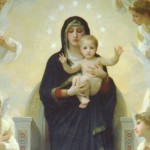
Deification of the Virgin


I found the following excerpt from a blog which illuminates the dogmas of the Immaculate Conception and Assumption of Mary:

"It was a class in Anatomy and Physiology, and the lesson on microchimerism, that concretely illustrated for me those two dogmas. Learning that every child leaves within his mother a microscopic bit of himself—and that it remains within her forever—the dogma of the Immaculate Conception was instantly illuminated.

Mary, then, was indeed a tabernacle for the divinity—not for a limited time, but for all of her life. Thus the Immaculate Conception made and makes perfect sense: God, who is all-good is also completely pure; the vessel in which he resides, then, must also be pure, or it would not be able to sustain all of that light.

And this relates directly to the Assumption of Mary as well. In the psalms we read 'you will not suffer your beloved to undergo corruption.' Christ’s divine body did not undergo corruption, but ascended into heaven; it follows that his mother’s body, which contained a cellular component of that divinity—and a particle of God is God, entire—would not be permitted to undergo corruption, as well.

It could not be otherwise. The God particle, commingled with humanity, necessarily preserves humanity, and calls it to himself. This is incarnational. It is eucharistic, from the beginning. It is our life, conceived in light" (http://www.firstthings.com/onthesquare/2011/05/lovemaking-with-the-lights-on).


Next is an excerpt given in explanation of the difference between being divine by nature and deification by participation:

To sum up simply, Mary is a goddess by participating in divinity, through grace, to a higher extent than most humans can or will. However, all saints (that is, all who arrive in heaven) do and so Mary with all the saints could rightly be called gods and goddesses. But this in no way compromises monotheism of the one triune God, whose divinity is through itself (found in comments on the blog, Mary and Mariology: Divinizing Mary?).

These both struck me as interesting because the Catholic Church has often been accused of divinizing Mary and elevating her to the level of a goddess. In the case of the first excerpt, the only disagreement I might have is the argument that a particle of God is God entire. But a particle of God is certainly divine, and modern science sheds light on and validates Catholic teaching regarding Mary. As I have discussed before, Charlene Spretnak posed the question in Missing Mary as to whether the Blessed Mother would have been ontologically changed into a quasi-divine (or semi-divine) being by virtue of carrying Jesus in her womb, and the author implied that she would have.

The second excerpt reflects the theology of early Church Fathers who said that "God became man so that man might become gods." This means that people are not divine by nature but have the potential to be deified through participation in the divine nature. Rather than referring to Mary as semi-divine, I believe she should be understood as a divinized human being, with her deification being utterly unique by virtue of her Immaculate Conception and her physical motherhood of God the Son. I agree with Spretnak that modern science gives evidence that the traditional, cosmological, biblicalplus veneration of Mary and her full spiritual presence needs to be returned to the Church. Mary is officially honored with the unique status of hyperdulia by the Church, and so she cannot be relegated to being merely another in the communion of saints or just a model of discipleship.

The Church does not call the saints gods and goddesses, so I would discourage that practice. But I do think there is too much stigma attached to the word goddess. The name "God" typically implies a male deity. In polytheistic religions, there were multiple gods and goddesses with varying ranks of power. In Catholicism, there is one God in three persons, and this God is neither male nor female, but pure spirit. "Goddess" simply means a female deity. If the masculine version can be used to describe the one, true Creator, then why is there such repulsion in the idea of the Almighty being called Goddess? The argument is that "goddess" implies a polytheistic, pagan religion, but the same could be argued that pagans also used the word "god".  In fact, there was a monotheistic religion pre-dating the Judeo-Christian tradition which believed in an entirely feminine trinity (the maiden, mother, and crone). One interpretation of history is that the patriarchal conquerors of the people who worshipped the Great Mother created an all-male version of this trinity. The idea of God in three persons is correct, but both variations are incomplete.

This is why devotion to Mary is so important, as well as the revival of the ancient Wisdom tradition of the Old Testament that was also practiced by the early Church, in which God was understood to have a feminine dimension. We need religion that honors the sacred feminine and the bridal-maternal aspects of divinity. We need to see the hidden Sophia, who is part and parcel of Christ, and who is manifested in His human Mother.

Tuesday, November 6, 2012

God as Unity

God is beyond human comprehension in a certain sense, but we can have a personal relationship with the Almighty. God is neither male nor female. God's revealed name is the Father, the Son, and the Holy Spirit. We can know something about God's nature through the Bible and Church Tradition, and through the guidance of the Holy Spirit in personal revelation. Yet we are still limited by human language and symbolism to grasp and articulate the ineffable mystery of the triune Godhead. If we are humble, we acknowledge what little we actually know.

As both women and men are made in the image of God, we can use language for God in both masculine and feminine terms. The truest way I have found to comprehend the nature of God is as the spiritual unity of the masculine and feminine dimensions of being. Again, God is not divided into male and female principles; God is pure spirit. When I refer to masculine and feminine principles, it is by way of analogy to our human condition and our ideas regarding the qualities typically associated with a particular gender. The creation story of Genesis and the marriage of man and woman teach that men and women together are a symbol of the sacred unity that exists in God. A man and woman being flesh of the same flesh and bone of the same bone, coming together in love and open to procreation, gives us a glimpse into the divine nature. God is the perfection of family relationship.  At the same time, both men and women are unique, equally valid images of the divine.

So when I point out that names like Ruah, the Hebrew for Spirit, and Hokmah and Sophia (Hebrew and Greek for Wisdom, respectively) are feminine in gender, that is not to say that God is a woman any more than God is a man. It is to emphasize that Elohim, the Hebrew name for God, is grammatically expressive of a divinity that perfectly contains the union of what we understand as male and female, and that this gives us a clue to follow.

To incorporate the language of Mother in reference to God, or to refer to the Holy Spirit as "she" in some cases, such as in the manifestation of the Spirit as Lady Wisdom, in no way infringes upon divine revelation. To call God both "he" and "she" simply equalizes theological language that has excluded the truth of the unity of God, that has historically been excessively patriarchal, resulting in untold damage to the psyche and spiritual life of all humankind. Not to mention the devastation of planet Earth, so often characterized in feminine terms and treated in ways that parallel violence toward women. Nevertheless, it would not be appropriate to change the revealed name of the Trinity--the Father, the Son, and the Holy Spirit. Also, for the matter of consistency, the use of male pronouns for all members of the Trinity in the liturgy is perhaps more efficacious. This would not exclude, however, sermons and homilies that focus upon the motherhood of God or references to God's "feminine face", as I have occasionally heard spoken by priests at Mass. Then again, referring to the Holy Spirit as she in some contexts in order to reflect the often bridal-maternal nature of this divine Person within the Trinity would most fully characterize God as divine family unity, that which our human family unity mirrors.


 Woman Clothed with the Sun by Duncan Long


Names like Spirit-Sophia, used by Catholic theologian Elizabeth A. Johnson, point to the personification of the Holy Spirit as "Lady" in the Wisdom Books of the Bible. Holy Wisdom as "she" is not merely a grammatical coincidence; it is a full-fledged theology of the Spirit of God in bridal-maternal terms. The Holy Spirit could rightly be called the mystical "feminine nature" of the Trinity. Like all members of the Godhead, the Spirit is fully an expression of divine unity. However, the "Mother Love" of God is most clearly revealed through the Third Person. And Mary, being the sanctuary of the Holy Spirit and Mother of the Church, reveals so personally the sacred feminine in divinity. Jesus said that those who have seen him have seen the Father. Likewise, a personal relationship with Mary helps us to "see" the Holy Spirit/Sophia. This is why, especially in a heavily patriarchal culture, Marian devotion must be emphasized and encouraged, not marginalized. More homilies, hymns and prayers to Mary in the liturgy, and fuller celebrations of her feast days (that is, a return to more traditional expressions of devotion), would provide a greater balance to our community worship.

How we name things does matter. A rose by any other name may very well smell as sweet, but the name of rose brings to mind vividly what the rose is and what it symbolizes. Exclusively male terms for God do not bring to our minds and hearts the truth of God's unity or the fullness of God's love. Woman must understand that she is as complete an expression of the image of God as is man, and man must also comprehend this revelation.

Thursday, October 25, 2012

Ruah Elohim

"Again (v., 27), how could Adam (and Eve) be made in the image of the Elohim, male and female, unless the Elohim were male and female also? The word Elohim is a plural formed from the feminine singular ALH, Eloh, by adding IM to the word. But inasmuch as IM is usually the termination of the masculine plural, and is here added to a feminine noun, it gives to the word Elohim the sense of a female potency united to a masculine idea, and thereby capable of producing an offspring. Now we hear much of the Father and the Son, but we hear nothing of the Mother in the ordinary religions of the day. But in the Kabbalah we find that the Ancient of Days conforms himself simultaneously into the Father and the Mother, and thus begets the Son. Now this Mother is Elohim." (http://www.sacred-texts.com/wmn/wb/wb59.htm)

When I met my husband, I asked him if he had a religion (big question for a first date!). He told me that he practiced Kabbalah, which I had never heard of, so of course I was intrigued. Kabbalah is basically Jewish mysticism. I found a book about this religion so that I could understand what my new boyfriend was into. In Kabbalah, the Tree of Life provides the framework for understanding spiritual levels of being and the nature of God. It's very complex, but the idea that captured my imagination was the explanation of the Hebrew word Elohim, which in English is translated as God. God is obviously a singular word, but when God speaks the words, "Let us" in the creation story of Genesis, we get a glimpse of the trinitarian nature of God, God in three persons. In Catholic tradition, the Son is begotten of the Father, and the Holy Spirit proceeds from both as the Love generated between them. But this begetting and proceeding is a simultaneous process, not a temporal one-after-the-other. I see the Spirit as the "Mother Love" of the Trinity.


 Mary and the Holy Spirit


As the initial, quoted paragraph above states, Elohim is comprised of a masculine plural added to a feminine noun. When I contemplate Catholic writer Thomas Merton's theology that Holy Wisdom (Sophia) is the Ousia of God, God's primordial essence of being, and that Sophia is inherent to (contained in) all three persons of the Trinity, the meaning of the word Elohim is perfectly crystallized. The Spirit of God is pictured in the creation story, hovering over the waters like a mother bird over her eggs, as the divine power of generation. In Hebrew, this person of the Trinity is named Ruah Elohim. As I have discussed before, Ruah is a feminine word. We find in Ruah Elohim, who is the Holy Spirit (Ruah Ha-Kodesh), the manifestation of the maternal aspect of God. The Holy Spirit is Lord, as the Nicene Creed states, not because the Spirit is particularly male or masculine, but because the Spirit is a divinely equal member of the Trinity along with the Father and the Son, both of whom Sacred Scripture calls "Lord".

It has become increasingly apparent to me that the Lady Wisdom of the Bible fleshes out, so to speak, the nature of the third person of the Trinity. Rather than remaining a kind of impersonal, ambiguous entity running the risk of becoming the marginalized member of the Godhead, we see clearly in Sophia the bridal-maternal character of the Holy Spirit. Furthermore, if we consider the profound indwelling of Mary by the Spirit of Wisdom, especially as articulated by St. Maximilian Kolbe, we can comprehend the basis of Marian devotion as a reflection of the intuitive understanding that the mission of the Holy Spirit is accomplished particularly through the Mother of God.

Kolbe goes so far as to say that Mary is a "quasi-incarnation" of the Holy Spirit, while being clear that this relationship is not the same in nature as the hypostatic union of the divine and human natures of Jesus, who is fully God and fully man. Mary is purely human, but Kolbe sees Mary as the ultimate sanctuary of the Holy Spirit, in as close a relationship as is possible of the strictly human with the divine. Mary does nothing apart from the Holy Spirit. Kolbe teaches that Mary's soul is completely permeated with the Holy Spirit, so her being is in perfect harmony with the mission of this Spirit of Wisdom. According to the saint, this is why Mary could call herself the Immaculate Conception at Lourdes. Because the Holy Spirit is the uncreated Immaculate Conception, Mary is the created Immaculate Conception. Therefore, veneration of Mary reflects adoration of the Holy Spirit.

It is also important to note that this inseparable union between Mary and the Holy Spirit does not obliterate Mary's unique personality and essential qualities as a human being. Because she was from her conception free from sin, Mary could most completely experience God's grace and achieve the holiness that the Spirit worked, and continues to work, in her. Precisely because she is not bogged down and separated from God by a sinful nature, Mary can be that much more Mary. I think that one reason people are so drawn to the Blessed Mother is that we quest for the "authentic self", in pop psychology terms. We see in Mary a fully actualized human being. This is the goal of all mystics who desire unity with God. The more we have Christ in us, the more our true selves we become. By losing ourselves we find ourselves, as Jesus taught his disciples about Life. 

At RCIA on Sunday, the teacher talked about prayer and its nature as a personal relationship with God. She said that we can focus prayer to any of the members of the Trinity, in whatever way brings us closer to God. She spoke of being initially confused about the Holy Spirit, but that she is now a "Holy Spirit person".  I shared my use of the Hebrew name Ruah for Spirit in my prayers. I find it very beautiful, and for me at this time in my journey, Ruah Elohim, such an eloquently poetic name, is my preferred call to God. It fills my imagination with an image of God that is both Father and Mother, with a focus on the immanent, maternal Presence (Shekinah) of our Holy Creator.


Wednesday, October 24, 2012

Simple Marian Devotions #2

At our local Family Dollar I can buy Catholic, glass jar candles for a couple of dollars. I have one with a picture of Our Lady of Guadalupe on it. The prayer reads, Merciful Virgin Mary of Guadalupe, show clemency, love and compassion to those who love you and search for your protection. May the sweet fragrance of roses reach your divine son, our Lord Jesus Christ, that he may hear our prayers. Wipe our tears and give us comfort and assistance. (concentrate on your desires). Amen. 


As a simple devotion, you can light the candle and say the prayer, adding your special needs and petitions. I have the candle burning right beside me as I write this. I am also listening to "An English Ladymass" on CD, which contains 13th- and 14th-century chant and polyphony in honor of the Virgin Mary. The lyrics are in Latin, so I don't understand them, but the women's voices are glorious, and the music is calming. I borrowed the CD from my library system and have others on the way. You can play music such as this and meditate upon the love and intercession of our heavenly Mother while making dinner, folding laundry, writing in your journal, or practicing yoga.

Today I went for a walk in the woods with my 8-year-old daughter. Luckily I had my Rosary in my purse, and I recalled how John Paul II had a regular practice of walking in nature while praying the Rosary. I got through most of the Luminous Mysteries before we had to go. There is something about a moving meditation that is especially gratifying.


 Pope John Paul II

I usually pray for a particular intention at the start of my Rosary recitations. Sharing our smallest worries and our deepest needs and sorrows, as well as our joys, hopes, and dreams, truly honors our Holy Queen. And we can trust that she will present them as the most fragrant and lovely bouquet of roses to her divine Son. In honoring her, we honor our Lord.

Tuesday, October 2, 2012

Why God Is Called Father

"A good book to read concerning power, authority and the politics of language is The Church and the Culture War by Joyce A. Little (Ignatius Press: San Francisco, 1995).
On page 148 of her book, Joyce Little discusses God as Father.  'Now the God of Israel is Holy (Psalm 99). The word "holy" is rooted in the word "separated" (1 Chron. 23:13). God, being pure Spirit, has a certain "separation" or otherness to His material creation. This otherness of God is further revealed when He sent His only Son to the world instead of Himself. Even though we are created in His image, God the Father keeps His distance from matter to a certain extent. For this reason, the title "Mother" is not appropriate for God, since the words: "mother" and "matter", are etymologically related (Latin root: mater-). God is not Mother Nature or Mother Earth. Also mothers during pregnancy are biologically joined to their child, but fathers are physically separated. Even though fathers love their children, there is still a certain degree of distance as compared to mothers. Once again this "separation" of father from child is related to the "separation" (Holiness) of God from creation. The God of Israel is called Father not because He is male, but because He is Holy' " (from the online article, "Mother God" @ http://users.binary.net/polycarp/momgod.html).

The above excerpt is one of the best explanations I have encountered regarding why God is specifically called Father. Though the Bible often uses maternal images to impart understanding of the nature of God, it never calls him "Mother".  Little's theology echoes that of George S. Montague in Our Father, Our Mother, with the idea that the male image of fatherhood reflects God's transcendence. While God is equally our Divine Mother, his official title, Father, is connotative of his separateness from creation; that is, we humans are not divine and neither is anything else in the material world. However, God does dwell among us in the 3rd Person of the Trinity, known as the Holy Spirit, who is often especially understood in bridal-maternal terms. But it is Mary, in her complete union with this Spirit of Wisdom, who best reflects the immanence of God's motherly nature. It is she who has been revealed, by Church Tradition through the Holy Spirit, with the titles Mother of God and Mother of the Church, to manifest for us an image of the sacred feminine by which we can most adequately experience God as daughter, bride, and mother.


 Madonna of the Rosary - Murillo


Using the traditional language, Jesus' incarnation as the God-man can be understood most simply by virtue of his having a divine Father in heaven and a human Mother on earth, making him both fully human and fully divine. His existence as a human being illustrates that we can literally see our Father God in him, and also glimpse God as Mother through his own Mother, Mary, for she is the Mother of God. The way Mary loves Jesus is the way God loves all of his children like a mother. And she also represents the divinized state of being to which we aspire, when we too will inherit a glorified body and live eternally with God as his children. Mary reigns as our Mother, our Sister, our Queen, our Intercessor and Advocate. She is the Mediatrix of All Graces, working in complete harmony with the Holy Spirit of Wisdom who dwells within her to bring about our salvation, not in an equal way to her Son, but uniquely with him.

It still hurts sometimes, this overwhelmingly masculine language ascribed to God. Why is the motherhood of God so hidden? I believe it is because Wisdom, the Sophia at the heart of God, who is equally part and parcel of all Persons of the Trinity, is the Holy of Holies. Without Mary, we just can't get at this mystery at all. Without Mary, the Christian story is truly impoverished and lacking in the fullness of our beautiful faith. Brothers and sisters in Christ, fully embrace God as your Father, for it is a privilege granted to us by our Savior, and also fully embrace Mary as your Mother, for she is Jesus' sweet and holy Gift of Love. With Mary, our family is complete.

Tuesday, August 14, 2012

Women and the Priesthood

http://catholiceducation.org/articles/apologetics/ap0001.html

The above link is a very nice article by a woman on why the priesthood is not ever going to be a Catholic vocation for women. I don't know enough about the historicity of the Church's position to make any arguments here. I can only point out the biblical fact that Jesus only chose male apostles among his 12 who were ordained at the Last Supper to perform the sacrament of the holy Eucharist. I won't debate theology with anyone, or travel the road of ambiguous historical evidence. I'm simply not qualified. But the wedding symbolism the article above evokes gives a deeper meaning to the whole question, a panoramic view that gets at the entire purpose of Jesus' life on this earth. He is the Bridegroom, and his Church is the Bride, and the mutuality of the masculine and feminine sexes of humanity is foundational and poetic. It's who we are. Men and women are equal but different images of divinity.

I can't say that I like the chastising tone of the early Church Fathers in regard to women, but their opinions are rather beside the point if one looks at the biblical evidence and contemplates Jesus' intentions in his earthly mission. Then we don't have to get defensive around language that seems hostile toward women. 

It has been impossible in my seeking and journey toward the Catholic Church not to notice these debates, which seem more political than anything, about topics such as women's ordination, homosexuality, abortion, etc., and the accusations that the position the Church takes on these hot button issues is somehow perversely antiquated and hateful. Yet from what I understand, the Church is held by Catholics to be the keeper and protector of the deposit of faith, and her  teachings are guided by the Holy Spirit. We can rest assured that we have the Truth in the Church. This is the only Christian Church that can legitimately make the claim of apostolic authority! How can we be Catholic and not honor the teachings of the Church? One might as well be Protestant or nondenominational and find a church that reflects one's views and go on with life outside the Catholic faith.

What I have read of the opinions of some originally led me to believe that women's ordination is a topic open for debate and that the Church could be persuaded to change it's position. But Pope John Paul II made it clear that this simply isn't possible. Here is his Ordinatio Sacerdotalis:
http://www.vatican.va/holy_father/john_paul_ii/apost_letters/documents/hf_jp-ii_apl_22051994_ordinatio-sacerdotalis_en.html

This seems to argue that the teaching of the Church on this matter is definitive without formally declaring it as dogma. I imagine that is where the window appears still to be cracked open for interpretation. Nevertheless, it seems sensible to simply honor the Church's declaration on the matter and pray for peace if you are struggling with it. I always come back to St. Augustine's wise words in regard to faith coming first, and then understanding.

Saturday, August 11, 2012

Dealing with Negativity toward the Church

I joined a Facebook group this week that looked interesting and left it after no more than two days. By its name it seemed to be a Christian group (having the word Christian as part of it) that honors the sacred feminine. While I did expect to see some pagan tendencies, what I did not anticipate was the strident anti-Catholic attitude of certain members (which in some cases came across as an attack on my spiritual journey).  I understood that some were motivated out of concern that I would make a grand mistake by joining the Catholic Church, but it was rude nonetheless. It didn't take long to realize that in general, this is by and large really not a Christian group.

What were the complaints? The word patriarchy overwhelmingly came up, as well as misogyny. Specifically, references were made to the sex scandals in the Church and the "hostile" refusal of women to the vocation of the priesthood. Now, I too have complained about the patriarchal history of both religion and the world and have bemoaned the plight of women and the destruction of our earth. Luckily, though, I do not have too many negative memories of church itself. There was one sermon in one church that left me feeling like I had been punched repeatedly in the gut and head, and I never returned. But the issue had nothing to do with women.

What I have lamented in my own church upbringing in Protestant denominations was the absence of Mary and the sacred feminine. But I have no resentment in this regard. The path that finally led me home was evidently the one I was meant to tread. I went to a church as an adult with a female minister, and I had no problem with that. In fact, she was wonderful! But I do not feel strongly that women need to be allowed to be Catholic priests, and if the Church has solid theological and historical reasons for this prohibition, I trust the Church's authority. And I think that is the key. The problem many people, from all Christian denominations, have with the Catholic Church is her claim to authority. Authority is not the same thing as abuse of power. I feel liberated, in fact, that the Church does possess and act with authority, that there is a place where Truth can be found, and where the cacophony of clamoring voices is hushed. I can confidently rest in the protective authority of the Church.

That is not to say that I have blindly believed every doctrine or dogma without question. But when I have doubts or confusion, I just keep praying and studying and have faith that understanding will follow in God's time and in His way. I go to the source. The Church teaches that God is neither male nor female but is pure spirit and possesses the perfect attributes of both Father and Mother. The Church herself is called Mother, and so is Mary, who is the foremost disciple of the Church. Traditionally, it is through Mary and the Church that the feminine, maternal aspect of God is revealed. And as I have repeatedly discussed, while the exclusive use of the name "Father" is problematic, it is not meant to exclude the motherhood of God. In a similar way, my blog, Organic Mothering, does not exclude fathering. Also, the Holy Spirit, while called Lord, is clearly depicted in bridal-maternal language, and in fact in both Sacred Scripture and Catholic practice is often referred to as Wisdom, who is personified in female terms. The sacred feminine may be hidden to a great extent, but she is quite certainly present. The very Divine Presence of God is Shekinah, another clearly feminine name.

It's true that there have been misogynist statements made by early Church fathers, and surely today as well, but that is not the official position of the Church at all. Many Church fathers also made egalitarian comments in favor of upholding the dignity of women, especially within marriage.

And as far as the Church's teachings on abortion, I am in full agreement. Legalized abortion has not "liberated" women; it has put women and all of society in chains instead. I'm still considering the subject of birth control, but I have no doubt that in many cases at least, it has been the cause of health problems and has negatively impacted morality. At any rate, none of the Church's proclamations on these women's issues would lead me to believe that the Church hates women, which is exactly what misogyny means.

I have not been Catholic in the past and have not had negative experiences in the Church, and I don't judge those who express their pain as the result of Catholicism. But that suffering does not come from God. The Church herself is not evil, but some of her members are. Holding onto resentment is poisonous to the soul. Some of those harmed in the past seem to give constant, new fuel to their anger. They don't seem to be willing to forgive and be healed. They want to stay angry and bitter. They evidently get some payoff from continuing to grieve and suffer, to refuse to unite their suffering with Jesus on the cross and then to come down from the cross and rise from the dead with Him. They have thrown the proverbial baby out with the bath water. I have compassion for those in this circumstance, but I can't dance around the fire with them and condone the way they keep throwing in more logs and fanning the flames. Emotions are contagious. Build up your immunity by staying securely under Mary's mantle!


Tuesday, August 7, 2012

My Catholic Great-Grandmother's Sacrifice

This past June the 8th, my 8-year-old daughter was baptized at Sacred Heart Catholic Church. My grandparents, who are Methodist, were present for the occasion. I knew from my mother that my grandma had been "sprinkled" as a baby, so I had a vague notion that she had been Catholic. But some Protestant denominations also baptize infants, and I never really knew the story. When I was growing up my family, including my grandparents, belonged to the Church of Christ. This was the church of my grandpa's youth. My grandparents left that church after long time membership and joined the First Methodist, which was the church that my grandma had belonged to in her youth. But it turns out there's more to this history.

Either before or after my daughter's baptism I had the opportunity to share my Rosary miracle with my grandma (see June 1 post). This brought back a flood of memory for her. She told me that she too had been baptized at the Sacred Heart Catholic Church. Her mother was a Catholic Frenchwoman, and she took my grandma and her older sister to church there when they were very young. My grandma's father, however, was Protestant, and he went to the United Brethern Church (from my understanding, this eventually become a United Methodist Church). So the family was divided by religious denomination and did not attend church together. My grandma told me that when she was only 3 or 4, they came home from church one Sunday, and there was a proliferation of pink roses in full bloom in her yard. She is 84 years old, and she still has this vivid image of the roses in her mind after 80 years. She can still see them perfectly. Why this particular memory stands out, she says she does not know...

In my mind, I am screaming, "Mary!"  Grandma associates the roses with her young childhood in the Catholic Church. And there is no more predominant symbol of Mary than the rose. Rosary literally means garland of roses. My grandma did not attend the Catholic Church past the age of 4. For the sake of family unity, my great-grandmother began attending church with her husband so that they could all worship together. But, my grandma told me, her mother never, ever stopped being Catholic. She never transferred membership to my great-grandfather's church. I believe strongly that Mary knew that my grandma, and her mother and sister, would be leaving the Catholic Church, and the gorgeous pink rose blossoms were Mary's way of letting them know that she would always be with them. She would always be their Mother.  Subconsciously my grandma associated my Rosary miracle with her own miracle of roses.


I was only 5 when my great-grandmother died. I have memories of her, and I remember crying when my mom told me that she had passed away. I wish I would have known my Catholic great-grandmother who sacrificed so much for the peace and unity of her family. How did she live without the Holy Sacrament, the Eucharist? How did she live without Mary as part of Christian worship? Did she still pray her Rosary? How her heart must have ached. How brave she must have been, how full of faith.

But I am comforted by this thought:  My great-grandma Ruth is a saint in heaven. I can talk to her whenever I want. And how happy she must have been on the day of my daughter's baptism, to see from the celestial view her great-great-grandaughter coming into the Church that she had so loved in her lifetime, the Church she left but never abandoned. And of course she will also be thrilled to see me enter the Church at the Easter vigil next year! In my small way, I can make reparation for her sacrifice.  I can give something precious back to her, and I am humbled to be able to honor her memory in this way.

Wednesday, August 1, 2012

True Devotion to Mary

As (Mary) is the dawn which precedes and reveals the Sun of Justice, who is Jesus Christ, she must be seen and recognized in order that Jesus Christ may also be.  
--St. Louis de Montfort 


In his book True Devotion to Mary, St. Louis de Montfort repeatedly uses passages from the Wisdom Books of the Bible to refer to the Virgin Mother of Christ. Montfort specifically designates Jesus as Holy Wisdom; in concert with this, it appears that because of his deep understanding of the completeness of Wisdom's indwelling of the Blessed Mother, he also recognizes Mary as Wisdom in a mystical sense. She is the embodiment of the feminine Wisdom, who is the mother/daughter/bride aspect of divinity.

Montfort advocates his particular process of consecration to Jesus through Mary in this book, and I think it no exaggeration to say that he felt there could be no fullness of expression of Catholicism without devotion to the Mother of God. One cannot truly know Jesus without knowing his mother. Therefore, a Christianity lacking in Marian devotion is an incomplete religion, from Montfort's point of view.

It seems, then, following the example of Montfort, that it is beneficial to contemplate the Virgin Mary when one reads the Wisdom Books of the Old Testament (particularly Proverbs, Wisdom, and Sirach). One could picture our spiritual Mother while dwelling upon these holy words and images, making this a powerful practice of devotion to Our Lady.

"We are convinced without any doubt that devotion to Our Lady is essentially joined with devotion to Christ, that it assures a firmness of conviction to faith in Him and in His Church, a vital adherence to Him and to His Church which, without devotion to Mary, would be impoverished and compromised." --Pope Paul VI

Thursday, July 5, 2012

Which Bible Do You Read?


Today I received the New American Bible (Official Catholic Bible) from Amazon.com. I already had a Bible--more than one, in fact. Why yet another version? Ah, that's exactly the reason--there are so many versions. Years ago I heard the advice given that one should read several translations of the Bible in order to get a clearer picture of the meaning. We English speaking folks often forget that the Bible was not written in English. Why does this matter? Well, for one thing, the original writers of the Bible were inspired by God, but it does not follow that this is the case with all translators. Also, there can be many valid translations, of varying literalism and accuracy of meaning.

Then you have meanings that are simply lost in translation, because English does not have an equivalent word or concept with which to translate the original Hebrew, Aramaic, and Greek. What we read in English is many times an inadequate approximation that cannot transfer the full flavor of the original into our native tongue. So you have those issues regardless. But then you have the fact of inaccurate revisions and tampering, and people go around quoting things from a Bible that may not really be a valid, reliable translation. And that's not even to mention the taking of a verse out of the context of its entire passage and the Bible as a whole, and without regard to authoritative interpretation. Strong words? Harsh? Maybe--but true nonetheless. This is all a matter of historical record, not a matter of personal opinion. So let's get on with it, shall we?

Long story short, the Catholic Church did all of the work to bring us the Bible as we know it today. Hundreds of books were sorted through and argued over to determine, by the guiding of the Holy Spirit, which were truly inspired by God. Some books were deemed good to read, valuable for their religious teaching and historical information, but nonetheless did not make the cut into the canon, or list of official books. These works (such as the Protoevangelium of James) are called apocryphal, and some of them reflect Church Tradition and so are used by Catholics. But again, they have never been part of the Bible.

These books are not the same as the group of 7 books called the "Apocrypha" by Protestants. As you can read in my other post on this subject, these 7 books (including Sirach and Wisdom) have always been considered canonical by Catholics (who again, I must emphasize, put the Bible into writing and are responsible for the fact that we have it at all). However, non-Christian Jews removed these portions from their holy book (what Christians call the Old Testament), for one reason because those books strongly uphold the belief in Jesus as the Messiah of prophesy. Protestant reformers adopted this version of the Old Testament that these non-Christian Jews used (albeit for different reasons)--an incomplete version.

Now, the New Testament contains all the same books in both Catholic and Protestant versions. Sort of.  *By 367 A.D., St. Athanasius of Alexandria published for the first time the definitive list, including all 27 books that we know today. In 419 the Second Council of Carthage again confirmed the canon, and Pope Boniface promulgated it officially. The New Testament as we know it today was then born. So as we see, Catholics determined the entire Bible. And all went well for a thousand years. But in 1546, the Council of Trent, prompted by a serious outbreak of heresy, had to remind everyone very clearly what was the Bible and what wasn't.

"Like the heretic Marcion before him, Martin Luther had decided that only he and Paul really understood Christ and, like Marcion, he frequently thought that he knew better than Paul. Luther translated the Bible himself, altering it substantially to suit his own views, and published it in parts between 1523 and 1534". (As I have mentioned before, if it were up to Luther and other reformers, the book of James and three others would no longer be part of the New Testament, because their teachings contradicted the new form of Christianity that Luther invented.) After that, various incompatible translations came thick and fast all over northern Europe.  [Johnson--reference below]

Henry VIII (famous for his beheadings) and Elizabeth I, for instance, each commissioned heavily revised Bibles to support their claim to be supreme head of the Chuch in England. Elizabeth asked her commissioners to use more "convenient terms and phrases" for those passages that were not edifying or were of offense to the monarchy's power. Elizabeth's successor James I produced the King James version, which also changed a number of crucial passages in both the Old and New Testaments. What a Biblical can of worms was opened by the Protestant Reformation!

Today, some of these unreliable versions have done a little backtracking, fixing up verses that were changed during the Reformation. The Catholic Church, for her part, continues to update her own translations, but she never strays from the original texts that she has so carefully kept since they were written, because, "...having been written under the inspiration of the Holy Spirit, they have God as their author"  [Vatican I].

The Catholic Church has consistently kept the deposit of faith and the Church that Jesus founded safe from heresy. All Christians owe the availability of Sacred Scripture to the Catholic Church and should be grateful for it. We have seen what happens when the Bible is edited (that is, changed against the original, God-inspired text) by men who wish it to reflect their own pre-conceived notions of the Christian faith rather than considering the teaching of the Church (and therefore Jesus). This is why the Tradition of the Church (the keeping of both oral and written teachings) is so important and why one cannot receive instruction from the Bible alone.

Sacred Scripture and Sacred Tradition act interdependently to give us the fullness and accuracy of our faith. One's own interpretations, though perhaps well-meaning, run the risk of  false teaching.  Think about this: The result of the break with the Sacred Tradition of the Catholic Church, built upon the authority given to Peter by Jesus himself, has resulted in some 40,000 Protestant denominations, all of whom differ significantly in what they believe yet all claim to be Christian. What Bible do you read (and quote), and on whose authority?


*Some information in this post has been quoted and paraphrased from Why Do Catholics Do That?, by Kevin Orlin Johnson, PH.D.

Saturday, June 16, 2012

Marian Devotion--to Restore the Sacred Feminine


When I was a kid my mother was fond of questioning, "Is nothing sacred?"  At the time I didn't really get what she meant.  Now I want to live a sacramental life, a life rooted in the practice of Catholicism.  In Hebrew, the phrase the fear of the Lord means reverence for God, the practice of true religion.  The fear of the Lord is largely absent in our secular culture, even in some of our churches.

One element of the sacred that needs to be restored is the embracing of the holy feminine.  Christians, pagans, and members of all the great world religions are recognizing the connection between the absence of a divine feminine presence in our consciousness and how this has manifested in the destruction of "Mother Nature".  Women, and our Earth, who is characterized always in feminine terms, are raped and degraded.  The imbalances of an overly patriarchal culture are reeking the havoc of war, poverty, pollution, extreme climate change, species endangerment and extinction, environmental destruction, and a serious shortage of drinking water.  Much of our food is not safe to eat, nor our products safe to use.  These issues are the result of a lack of the sacred in everyday life in general, and in particular of a feminine image of holiness.  Also, the dignity of women and all of humanity is threatened, and the broken family is a distressingly common phenomenon.  People intuitively feel like they have been orphaned of a spiritual mother, although they may not be able to put a finger on what is missing in their lives.

As Christians, we need Mary to restore this balance.  But there are road blocks that get in the way of embracing a Marian devotion.  Some say the patriarchy took over the Church and kicked the divine feminine, once known as the Great Mother, out of religious practice.  This is absolutely true of much of Protestant Christianity.  And it is true that some comments and attitudes of the early Catholic Church fathers were misogynist, blaming all of the world's woes on Eve exclusively, and by extension, on women in general.  Well, they were flawed, human men of their times.  But they also contemplated the unique role of the Virgin Mary and grew more and more in awe of her and what God has done through her.  They elevated her place in the Church to a level of extreme veneration.  The Holy Spirit worked to reveal Mary to these men as the ever-virgin, Divine Mother, the Mother of God.  And all of the Church's Marian dogmas reflect the understanding of her human but divinized nature, by virtue of partaking of the divinity of her son.

The Catholic Church embraces a God whose nature and qualities are both masculine and feminine.  The revelation of this truth is limited by the language we use and our human understanding; however, God as Mother is revealed through the Church (Ecclesia) herself, which is always referred to as "she", the Bride of Christ and his Mystical Body.  Mary is the most eminent member of the Church and is loved and revered as spiritual Mother.

We could invoke God in ways that reflect both the paternal and maternal aspects by using inclusive titles, such as Father-Mother God, God of Motherly Wisdom, Abba Sophia, Abba Shekinah, Abba Imma, or neutral names like Creator.  There is nothing theologically wrong with any of these, and I think there is a place for their use, especially in private devotion.  But in keeping with the revelation given to us by Jesus, Sacred Scripture, and the Tradition of the Church, we can pray to God the Father, Son, and Holy Spirit in the usual way, and allow the feminine presence of God (Shekinah) to be experienced through a rich Marian devotion.  For in Mary dwells Holy Wisdom, in her face is reflected the maternal light of God.  In her arms we are comforted by our holy Mother, Queen of Heaven.  We are not making Mary an idol when we do this, or worshiping her as God.  We are rather experiencing the motherhood of God through her.  She is immanent, she is human like us, and she is all that we, both women and men, aspire to be as divinized human beings.

This blog will explore the practices of a deep Marian devotion, one that points us to Jesus, converts us to the ways of God and a holy, sacramental life, and shows us the beauty of the divine feminine, the Great Mother, She Who Is.


Friday, June 1, 2012

Rosary Miracle


Mother's Day weekend my daughter, Beezy, and I attended a mother-daughter banquet at church. Among the gifts for the little girls was a pink rosary with plastic beads held together by string, and a felt pouch in which to keep it. Beezy also already had a chain rosary with red beads, and she kept both in the pouch under her pillow at night. After a bout with the stomach flu last week involving numerous puking episodes, her dad put the bedding in the wash on hot. He did not realize until after drying it that he had inadvertently washed the rosaries.

The chain had come apart on the red rosary, but it was going to be fixable. This was a relief, because it was a vintage rosary given to her by our priest to replace her very first rosary, which had been purchased at the church book sale and blessed by him, but then had broken shortly after. The pink rosary was another story. The two were tangled together, and the strings of the pink one had become seriously frayed and undone. It looked like a mess and was obviously ruined. I was sad, since we had so much enjoyed the mother-daughter banquet, and this was a special memento of the day. I lovingly cut the strings to extricate the chain rosary, and set about repairing it with pliers and my fingernails.

Once finished with the red rosary, I picked up the pink one, thinking I would just have to throw it away. But for some reason I decided to untangle it first. As I went along, a strange feeling overcame me, and at last I realized that the rosary was completely intact. It was as if I had never cut it, as if it had never gone through the washing machine at all! I was holding the cut threads in my hand, yet there was nothing missing from the rosary, no place that was frayed or unraveled. It was perfect. The handmade, felt pouch had also come through without any sign of damage.

What does this mean? It means whatever it means to you. For me, the message is that what has been severed will be restored. What has been broken will be made whole, even if I have cut it apart with my own hands. My prayers will be answered. The circle of roses is forever unbroken. For with God nothing is impossible.

Sunday, May 6, 2012

Just Jesus and Me?

A man who isolates himself seeks his own desire; He rages against all wise judgement (Proverbs 18:1). 

On the Catholic TV program, The Journey Home, host Marcus Grodi was talking to a former Episcopalian priest about the "just Jesus and me" doctrine of some evangelical churches. This means that the personal relationship with Jesus, and individual study of the Bible, is emphasized in exclusion to almost anything else in one's Christian walk. For some, even church is not absolutely necessary.

Catholics also recognize the importance of a personal relationship with Jesus, but the difference is that it happens within membership in the Church--the Body of Christ--and its living sacraments and traditions. The sacred scriptures also find their home and fullest expression within the liturgy (the Catholic church service known as the Mass). The homily given by the priest then applies the readings to daily life.

Individual Bible study is encouraged as well, but Catholics are not left to their own devices of interpretation. Rather, interpretation occurs through the lens of Tradition. It is true that some Catholics end up leaving the Church because they do not feel that they ever had a personal relationship with Jesus. They feel that they knew the associated rituals and practices but not Jesus himself, and some end up being drawn to a Protestant church to fill this need. This reflects poor teaching of the faith from within the Catholic Church, and from what I understand, a greater emphasis on knowing Jesus personally is one of the results of Vatican II to remedy this situation. The traffic is going both ways, also leading many to the fullness of the faith found in Catholicism.

Perhaps what has not always been understood is that the Catholic is never alone in his walk with Jesus, nor do I think Jesus wants anyone to venture on the path without company. Each member of the Church together with the others, both those still living on this earth and those living eternally in heaven (or still in purgatory), comprise the mystical Body of Christ, of which Jesus is the Head, and the Church is to respond to the Bridegroom, Jesus, as his Bride. Each member is also individually a bride of Christ, but this is within the context of the larger Body. Therefore, the idea of "just Jesus and me" is a false understanding. We are created to worship together.

There is a place for personal revelation, certainly, but again it cannot conflict with the teachings of the Church, which are based on the interdependent relationship of Scripture and Tradition. There were 12 apostles, as well as a group of women, who physically followed Jesus in his ministry. It was a large group of 120 disciples, including the Virgin Mary, who received the gift of the Holy Spirit at Pentecost together after Jesus ascended. This was the official beginning of the Church, headed by Peter, that exists still today, as Jesus promised that it would until he came again. Despite its long history of corruption and less than holy people, Jesus said that hell would not prevail over his Church, that he would protect it and its teachings. This Church is none other than the Catholic Church, the only church with an unbroken line tracing it back to Jesus and his apostles. What more assurance do we need?


 Pentecost

The primary form of worship in the Catholic Church, the Eucharist celebration, was established by Jesus at the Last Supper. Jesus also gave Peter the "keys to the kingdom", granting him the ability to forgive sins in Jesus' name and such power that whatever Peter bound on earth would be bound in heaven, and whatever he loosed on earth would be loosed in heaven. Jesus gave similar authority to all the apostles, with Peter having primacy, and this authority has been handed down to the succeeding popes and bishops, from generation to generation. Even in the midst of evil doings by people in the Church, the keys have never been lost.

And we have been left in good company. The dead are not dead, but they are living in him, says Jesus, and so we have Mary and the saints as role models, advocates, teachers, and intercessors. They walk along with us in the "great cloud of witnesses".  Think about it like this. Not so long ago, if a person wanted to be a blacksmith, he was apprenticed to a master blacksmith, learning the trade by working along side of him. He was not left to his own devices to figure out how to forge the metal.

When I was pregnant, I appointed one of my co-workers, Lisa, to be my "pregnancy mentor". She was three months further along in her pregnancy, so I could go to her with questions and learn from her experience. One day I was short of breath, and Lisa instructed me to raise both arms above my head, from which I received instant relief! Mary, the Mother of God, is my motherhood mentor, just as my own mother has also been, along with other mothers I know whose children are older than mine. And I, in return, am a mentor to others. We are not alone in any of our journeys in life!

Mary also mentors us by her example of faith and loyalty, leading us in how to be steadfast, spiritually mothering us gently but firmly, reminding us to "Do whatever he tells you," because, we must admit, we often forget. Mary is mother, teacher, and advocate, always helping when we ask her, praying for us, and pointing us back to Jesus when our eyes wander. She continues to cooperate fully in God's plan for our salvation and entrance into the divine family, which is why she is referred to as intercessor. Mary is the human person most perfectly conformed to Christ. We would be wise to attach ourselves to her.

A woman wrote in Mamapedia, an online group, that she does not ask, or need, others to pray for her, because she goes straight to Jesus. And yes, we should and must pray directly to God. But I don't think anyone can rightly deny that there is great power in the prayers of many, working together for healing, for a common cause, for Love to prevail. Paul tells us in his epistles to pray for each other, so that is what we are obligated to do. It behooves us all to walk with Jesus as one, holding hands. Just Jesus and me, and you, and your sister, neighbor, and friends, and Mary and the saints and the angels, all joining in a holy chorus, singing "Hosanna in the highest..."

Saturday, April 28, 2012

The Holy of Holies

I am interested right now in the Holy of Holies and its relationship to Jesus' mission and mystical connection to his mother, Mary. The Holy of Holies was the inner sanctuary of the Tabernacle, and later the Temple, in Jerusalem in the Hebrew Bible. The Ark of the Covenant, which held the Ten Commandments given to Moses, was kept there during the First Temple. Only the High Priest could enter the Holy of Holies, the Most Holy Place, once a year on Yom Kippur, the Day of Atonement, to offer the blood sacrifice and incense before the mercy seat. It is significant that the Holy of Holies was hidden by a veil, and that this veil was torn at the time of Jesus' crucifixion.


by A.L. Gardere

In the wilderness, on the day that the Tabernacle was first raised up, the cloud of the Lord (Shekinah) covered the Tabernacle. There are other times that this was recorded, and instructions were given that the Lord would appear in the cloud upon the mercy seat with its two statues of cherubim, and at that time the priests should not enter into the Tabernacle (Leviticus 16:2). Upon completion of the dedication of the Tabernacle, the Voice of God spoke to Moses "from between the Cherubim" (Numbers 7:89). [Information on the Holy Holies has been paraphrased from Wikipedia.]

With respect to my using the triquetra symbol to visualize the nature of God, we can think in terms of an outer court, which contains the masculine principle, the Lord, and an inner court, which contains the feminine principle, Lady Wisdom. I am understanding the Holy of Holies to mystically represent the intersection of these two principles, which is reflected in the bridal chamber of the Song of Songs in the Old Testament. The Beloved (the groom) and the Shulamite (the bride), symbolize God's relationship with his Sophia, Jesus' marriage to Ecclesia (the Church), and the mystical union of the Holy Spirit and the Virgin Mary. Mary is the Ark of the New Covenant, where the "glory cloud" presence of God (Shekinah) dwells. Human marriage between a man and a woman most perfectly represents the union of the masculine and feminine principles within God.


 triquetra

Jesus came to restore humanity and the human soul to the family of God, and to reconcile the masculine to the feminine in the unity of Pure Love. In the Old Testament, Israel (God's people) was compared to an unfaithful wife who God brings back to himself. In the Book of Revelation in the New Testament, Daughter Zion is seen in heavenly glory as the New Jerusalem, representing the redeemed people, God's bride.

The teachings of Jesus, the Bible, and the Church are available to us as the "pearl of great price" which is hidden until the right time (like the Holy of Holies behind the veil), for those who have "eyes to see" and "ears to hear."  Jesus' saving act tears the veil. The way of Wisdom, which I believe is reflected in this understanding of the unity represented by the Holy of Holies, leads to this pearl. When the Ark of the Covenant, which had long been lost, is seen in Revelation in God's Temple in heaven, there is revealed the great sign, the woman clothed with the sun, with the moon beneath her feet and on her head a crown of twelve stars. She is in labor to give birth to the most holy male child, who is taken by God and seated at his right hand, saved from the ancient serpent waiting to devour him. This woman is simultaneously Mary, Queen of Heaven; the Church, Bride of Christ; Daughter Zion, the New Jerusalem--who, with her divine Son, represents the restoration of the people to God and his Wisdom.

Mary is thus understood as Mother of Jesus, Daughter of God the Father, and Bride/Sanctuary of the Spirit. The Incarnation of Jesus in her womb is the Holy of Holies, the Most Holy Place.


Friday, April 20, 2012

Apologetics and Revisiting Ecumenism

Our Lady's Maronite Catholic Church


In a previous article I discuss ecumenism and a "take what you like and leave the rest" approach to religion based on the practices of 12 Step programs. In light of coming further along with my studies of the Catholic faith, I would like to return to this topic now. I have come upon the phrase, "cafeteria Catholic", which describes making a hodge podge selection of which Catholic teachings one chooses to follow and which to ignore. I still believe that bickering over details regarding Christian beliefs and practices is not pleasing to God, but knowing what you believe, and why, and standing up for your faith is important. The Bible says we should always be prepared to defend the hope that is in us. In Catholicism, this is called apologetics. This does not mean that one apologizes for being Catholic, but rather explains the tradition.

Because, by Catholic admission, many people have been poorly catechized (learned the specifics of what the church teaches), especially in the wake of the confusion after Vatican II, it is important for all Catholics and those entering the Church, such as myself, to be properly educated. Not doing so results in misunderstandings, such as that Catholics worship Mary, the saints, and statues. It is how the faith is defended, the attitude in which it is done, that is of concern as well.

If the Catholic Church is who she says she is, the very Church that Jesus Christ founded, and the pope and bishops are directly traceable back to the 12 apostles, and if the teaching of this Church is infallible (the official teaching, not the people themselves), then a Catholic must uphold all articles of faith, dogma, and traditions of the Church to be in union with Christ and the Church. That includes the teaching on birth control, homosexuality, abortion, and other controversial issues. This does not mean that we judge others if they don't follow the Church's teaching on matters such as these, or that we should hate anyone for believing or living differently. Quite the opposite. Love is always the order of the day.

So while I no longer "take what I like and leave the rest", because I do believe that the Church is who she says she is, I think it is imperative that Christians of opposing views do not alienate one another and that all religions need to be respected whose followers love and believe in God.  To my understanding, this is the stance of the Catholic Church. I took what I liked and left the rest at first, and now I rest instead on the authority of the Church as completely as I am able, one step at a time. I do believe that the fullest expression of Christian truth is found in the Catholic Church, and it is a relief not to have to interpret things, such as the Bible, myself. Since it is not my opinion, but God's word, both oral and written, that I must continue to know and understand through the Church, I also know that there is no reason to be defensive in any defense I am called to make.

Wednesday, April 11, 2012

Poetic Catholicism


One criticism of the Catholic Church by Protestants is that it is too ritualistic, and therefore seems "pagan". But this is exactly what is so cool about Catholicism! First of all, let's acknowledge that all forms of Christianity use rituals. Perhaps what is unique about Catholicism is the more expansive incorporation of all the senses. For instance, on Holy Thursday last week, special oils were brought forth and blessed, and there was a procession around the sanctuary using incense. On Good Friday we kissed the feet of Jesus on the cross. We bless ourselves with holy water to remind us of our baptism, and we make the sign of the cross many times during the liturgy. We kneel before taking a seat, and we stand, sit, and kneel throughout a typical service. Bells are rung during the Eucharist celebration, and at every mass we partake of the bread and wine, the transubstantiated body and blood of Jesus. That in itself ignites the imagination.

When praying the Rosary, we use our voices, our hands, and our memories to picture the mysteries of the lives of Jesus and Mary. We have statues and stations of the cross, candles, paintings, and chanting. Belief in the holiness of things, such as the containers used in the Eucharist, is a given.  We learn the lives of the saints and mystics, make pilgrimages to holy places, hold relics such as bones in awe, and hear of visitations to people by the Virgin Mary. We have a profound sense of the ancient. In short, Catholics are poetic. They think in metaphor. Jesus himself was like this, which we know because he taught using parables, where people and things in a story are analogies for deeper spiritual truths. When He said to build your house on a rock, he was talking about faith. Using symbols, we grasp meaning that would otherwise elude us.

When people accuse the Catholic Church of being pagan, they admit that Catholics are better at seeing and understanding God in the workings and beauty of nature. Yes, they may also be saying that Catholics worship saints and so are polytheistic and other such misunderstandings. But intuitively I think they know that Catholics have better mastered the art of connecting body, mind, and spirit in worship and life. Critics of Catholicism know on some level that they are missing something, a state of wholeness, and so they defensively dismiss Catholicism as too "Eastern", like Buddhism, perhaps (and this is yet another way of saying "pagan").

For myself, I love the poetic soul of the Church, her sights, sounds, fragrances, symbols, and imagination. My religious experience is enhanced and deepened by her rituals. Even her weirdness, like that cross kissing experience. I can't wait for the May crowning parade!


Sunday, April 8, 2012

Be Transformed


Today, Easter Sunday, begins our time of transformation and renewal. Now is our opportunity for rebirth of the body, mind, and spirit as we begin our journey to the Ascension of our Lord Jesus. Today the sun, the Son of God and man, truly shines. Behold, the Lamb of God who takes away the sins of the world! Not only does Holy Wisdom dwell in the Immaculate Heart of Mary, but in the Sacred Heart of Jesus lives the Sophia, Ecclesia Mater, and so in Him is the union of the masculine and the feminine perfectly fulfilled. We can look to Jesus for the balance and wholeness that is missing in our lives.


We have trodden the long road of Lent, fasting, giving alms to the poor, practicing penance, and offering up our suffering for the blessing of others, uniting our pain with Jesus in the garden of Gethsemane, the scourging at the pillar, the crowning of thorns and carrying of the cross, to His crucifixion. Now the tomb is empty, and we meet our Savior in the garden with Mary Magdalene, and proclaim to all that He is risen!

Now let us cast off our cares for a time, come up from the dark grave of suffering and into the light of God's joy. Who do you need to forgive? Don't forget to forgive yourself, as Jesus forgives you. What bad habits do you need to let go of? What haunts you from your past? The past is gone, and it is time to begin to live fully in the present, looking forward to better days. Our problems are not necessarily over, but we can breathe the lily scented air and plant some new beginnings. We can renew our trust in God and turn our lives over to His care, praying "not my will, but thine."  Perhaps now is the time to consecrate yourself to the Sacred Heart of Jesus through the Immaculate Heart of the Blessed Mother.

Wednesday, March 7, 2012

Dark Night of the Soul

I first heard the term, Dark Night of the Soul from spiritual speaker and writer Carolyn Myss. She describes a prolonged period of sadness and feeling of separation as one prays to move away from the false voices--those people, situations, and events that distract a person from his or her higher purpose--into a closer relationship with God and a deeper spiritual orientation. This can be mistaken for depression. One feels alienated and abandoned. But the Dark Night is a necessary step on the path to wholeness and an authentic way of living. Mother Theresa is said to have experienced such a Dark Night for many years. She was known for praying the Memorare nine times in a row on a regular basis:

Remember, O most gracious Virgin Mary, that never was it known that any one who fled to thy protection, implored thy help, or sought thy intercession, was left unaided. Inspired with this confidence, I fly to thee, O Virgin of virgins, my Mother; to thee I come, before thee I stand sinful and sorrowful. O Mother of the Word Incarnate! despise not my petitions, but in thy mercy, hear and answer me. Amen. 

 Our Lady of La Salette

I have experienced at least one Dark Night of the Soul in the past, and it occurred to me today that I may be in that space once again, as a part of turning my eyes back to God and traveling on this journey to the Catholic faith. External events have certainly contributed to my sorrow, which was so intense yesterday that I started crying, really hard, in the shower. My family did not hear me, which is good, because I did not want to alarm my child.

For a number of years I have felt that somehow I have become the black sheep of my family of origin. As a kid I never got into any trouble like some siblings did, was an excellent student, went to college, got married and had a child. Until recently I was the only one to start a family. Along the way I also pursued additional education twice, paying for both schools and becoming a successful esthetician at a prestigious day spa. I paid off all my debts and have had excellent credit for many years. By most standards, I am a productive member of society! So what happened?

Instead of bringing my family closer together, becoming a mother has caused rifts, hurt feelings, and a profound sense of alienation. I thought that healing was taking place, and past disagreements and misunderstandings had been put behind us, but evidently I was wrong, and my wounds have been torn back open. Add to that the sudden death of my next door neighbor last month, and this week the death of my best friend's grandpa. Beezy's favorite little cousin and playmate suddenly moved far away. A school shooting in my state, natural disasters with tornadoes destroying entire towns and taking people's lives, and the continuing unrest in the Middle East are among the contributors to a chain of suffering.


Agony in the Garden of Gethsemane

What a lenten season it has been so far! I had a 10 day long menstrual period, and then a family member uninvited my child to a special event, while other children are still welcome. How to handle the rejection? I have been in the habit of praying my Rosary every night, and so I pray for all of these trials and tribulations, for myself and for others that are also going through difficult times. I relate my pain to events in the lives of Jesus and Mary, and also my hope. I read my daily lenten meditation book, the Bible, and Catholic literature. I offer up my sorrow for the blessing of another. Since becoming Catholic, I am learning that suffering purifies us. It is a part of the life of faith and cannot be avoided, should not be run away from. It is a chance to grow closer to God and rely on Him in these tests. Jesus was tempted for 40 days in the wilderness. We walk with Him and imitate Him, also fasting and praying. We give alms to the poor to remind us of our abundance. We do penance for our sins, and we turn away from sin and toward the gospel. And at the end of the season, spring arrives and we rise again.


 Assumption of Mary

If you are experiencing a Dark Night of the Soul, allow yourself to feel your feelings. Have that good, awful cry and let it all pour out. Be open to God's grace and healing. When others turn against you, remember how Jesus was turned against to the point of death, and carry your cross with dignity. This too shall pass. And all will be well, and all will be well, and all manner of things shall be well.

Monday, February 20, 2012

The Truth About "Sola Scriptura" or "Is That in the Bible?"

I have been amazed to discover that a large number of former Protestant ministers have become Catholic, and while each path was unique, a common thread was the discovery, one by one, that certain Catholic tenets of the faith were indeed scriptural, and that the Evangelical view these men previously held was a misrepresentation of Catholic beliefs and traditions. The Protestant Reformation was based upon the battle cries, "Sola Scriptura" and "Sola Fide," and it is the former that I will focus upon here, through the analysis of David B. Currie's Born Fundamentalist, Born Again Catholic. 

Sola Scriptura means that the Bible is the only Christian authority. Some Protestants think that Catholics do not use the Bible, or think it is important, but that their traditions are the only authority. The truth is that Catholics read the Bible at every mass (church service), and are encouraged to read it on their own, and that the Bible is interpreted through the lens of Church Tradition, which includes those teachings passed down orally, not just those that are written. Tradition and Scripture are interdependent and cannot be separated. This is biblical:  "So then, brothers, stand firm and hold to the teachings we passed on to you, whether by word of mouth or by letter" (2 Th 2:15).

Currie states, "This verse, even if it were the only one on this topic in the entire Bible (it is not), would mortally wound the Protestant view that Scripture is all we need to know of the will of God for our salvation. Elsewhere Paul instructs Timothy to take this truth he has learned and find men capable of protecting it and passing it on (note the emphasis on the oral nature of this truth): 'And the things you have heard me say in the presence of many witnesses entrust to reliable men who will also be qualified to teach others' (2 Tim 2:2). This is a natural extension of Jesus' command to 'go and make disciples.' Christianity is a living religion, protected and passed on by people, not paper."

He goes on to say, "The verse I always used to quote on the sufficiency of Scripture actually reinforces the Catholic view:  'All Scripture is God-breathed and is useful for teaching, rebuking, correcting and training in righteousness' (2 Tim 3:16). The Bible is useful for all these, but this verse certainly never promotes Scripture as the final authority for our faith."  In fact, in his studies of what the earliest Christians believed, Currie found such representative statements as, "The bishop embodies the authority of God the Father,...show him every mark of respect...defer to him". And again: "It is proper for you to act in agreement with the mind of the bishop;...by your unity taking your keynote from God, you may with one voice through Jesus Christ sing a song to the Father...it profits you, therefore, to continue in your flawless unity, that you may at all times have a share in God."  Passages such as these had previously prompted Currie to write to a friend, "For fifteen centuries the bishop was the final authority. Along came Protestant reformers and set up a new authority."

It is poignant to note in the above passages that the unity of the Church was so important. There was supposed to be only one Christian Church. Peter was the first head bishop (pope):  "And I also say that you are Peter, and on this rock I will build by church, and the gates of Hades shall not prevail against it. And I will give you the keys of the kingdom of heaven, and whatever you bind on earth will be bound in heaven, and whatever you loose on earth will be loosed in heaven" (Mathew 16: 18, 19).

"By virtue of this divinely-appointed authority, the Catholic Church determined the canon of Scripture (what books belong in the Bible) at the end of the fourth century. We therefore believe in the Scriptures on the authority of the Catholic Church. After all, nothing in Scripture tells us what Scriptures are inspired, what books belong in the Bible, or that Scripture is the final authority on questions concerning the Christian faith. Instead, the Bible says that the Church, not the Scriptures, is the pinnacle and foundation of the truth (1 Tim. 3:15) and the final arbiter on questions of the Christian faith (Matt. 18:17). It is through the teaching authority and Apostolic Tradition (2 Thess. 2:15; 3:6; 1 Cor. 11:2) of this Church, who is guided by the Holy Spirit (John 14:16,26; 16:13), that we know of the divine inspiration of the Scriptures, and the manifold wisdom of God (cf. Ephesians 3:10)."  [This paragraph is from an online source.]

The Church spoken of in the Bible is today called the Catholic Church, which regards other Christian denominations as "separated brethern" and as fully Christian brothers and sisters. In contrast, I have heard Protestants say that Catholics are not real Christians or that they are not saved! Which reflects a truly Christian attitude of love? Here is the thing. Once the lid has been opened, you can't put it back on and deny that you have found the truth. The question should not be exclusively, "Where is that in the Bible?" but also, "What does the Church teach about our faith?" For me, obedience to God as a Christian means membership in his Church. That is why I am becoming Catholic, with all due respect to my fellow Christians who belong to other faith traditions.

Wednesday, February 15, 2012

Marian Mission Re-envisioned

When reading a story or watching a movie, it is fun to make predictions about the plot and to be right in the end! It is perhaps more interesting, however, to be kept guessing and to have events unfold in an unexpected way. Such is the case with my mission to bring Protestants to Mary and to find an ecumenical, Protestant-Catholic hybrid of Marian theology that could work. Things are not turning out as I had originally planned, but the journey certainly is intriguing (at least for me)!

For instance, it is apparent that Mary intended for me to follow her to the Catholic Church, rather than for me to remain in a Protestant church and carry her there, so to speak. However, I still think that perhaps reading about my particular path could encourage non-Catholic Christians to be more open-minded about the issue of Mary and to do some investigating into the beliefs of the Catholic Church on their own. I think it is a feasible idea to incorporate Marian devotion into a Protestant life, as some have already done.

As far as "blending" Catholic and Protestant teachings about Mary, well, a person could certainly do this if he chose to, but as for me, being Catholic does not provide such freedom. There is the issue of dogma, which is an article of faith revealed by God, which the magisterium of the Church presents to be believed and declares as binding. Mary's perpetual virginity is dogma, so I must believe this teaching on faith, even if I don't intellectually understand it yet.

The Divine Motherhood of Mary is the first dogma, which basically states that Jesus was born of a human woman, and that He is one person whose nature is both fully divine and fully human. This is where Mary's title Mother of God comes from; since these two aspects of Jesus are not separate, Mary is mother of both the divine and human natures contained within the incarnated Son of God, who is one with God. This dogma primarily defines who Jesus is and protects against heresy. All Christians should share in this belief. All Christians should also support the virginity of Mary at the time of Jesus' conception up till the time of his birth, even if they do not hold that Mary remained a virgin after. To say otherwise opposes the Bible and is heresy.

In addition to these beliefs about Mary common to all Christians, there should be no one who does not call Mary "highly favored by God", "blessed among women" and "blessed by every generation", as these descriptions come straight from the Bible. Furthermore, under no circumstances can anyone rightly argue that Jesus did not honor his mother, as He must have perfectly done so in obedience to the Ten Commandments. Therefore, He would not have rebuked her, scorned her, or rejected her in any way, as some have suggested, going so far as to say that Jesus did not even like His mother! Since we are to imitate Jesus, we have no choice as Christians but to honor her as well.

An unfortunate fact is that there are so many biblical interpretations out there, depending upon the Protestant denomination to which one belongs. There are some 40,000 Protestant denominations, showing a huge divisiveness in belief, even regarding what would seem to be the most basic tenets of the faith. This is the result of no clear authority. There is, in contrast, only one Catholic Church, so there is much less confusion over doctrine. As a result, there is a much clearer interpretation of Biblical events, understood through the lens of Tradition. Although there is some room for individual interpretation, in which a person reads the Bible and decides for himself what is meant and how it applies to one's life, this cannot be in opposition to official Church teaching. However, there is some latitude in areas in which the Church has not given detailed, decisive revelation. Some things can be believed one way or another and still be within the parameters of official Church teaching.

What I would like to do in future articles is to consider the scenes of Mary's life, particularly those in which it is argued that Mary is trying to interfere with Jesus' mission or is otherwise thought to be pictured in an unflattering light, and to spin a more likely, accurate portrayal. My hope is to bridge some of the gap between Protestant and Catholic thinking on Mary. Some of that depends upon understanding the basis for the authority of the Catholic Church, which Protestants by nature reject. But even if I can show that the Catholic interpretation of Mary is supported by scripture and is viable and valid, then I will have fulfilled my mission successfully!